Food Allergy Treatments

It is believed that over 15 million Americans have some type of food allergy. A food allergy occurs when the body's immune system perceives a specific food protein as a threat, much like it would a virus or bacteria. When the person ingests the food, the immune system goes to work to try and eliminate or neutralize the invader.

Take a short quiz to see if Food Allergy Treatment is right for you

Food Allergy Treatment Quiz

What is food allergy treatment?

Food allergy treatment is a medical plan designed to confirm which foods are truly causing allergic reactions, reduce the risk of accidental exposure, and help patients respond quickly if a reaction happens. Treatment may include allergy testing, food avoidance counseling, emergency medication planning, and, in select cases, immunotherapy.

A true food allergy happens when the immune system reacts to a food protein as a threat. That reaction can affect the skin, digestive tract, airways, or multiple body systems at once. Because symptoms can range from mild itching to severe anaphylaxis, treatment starts with an accurate diagnosis and a clear management plan.

At a glance

  • Best for: Patients with suspected or confirmed food allergy symptoms
  • Service type: Diagnostic evaluation and long-term allergy management
  • Appointment length: Varies by history, testing needs, and counseling time
  • Downtime: None for consultation; testing plans vary
  • How treatment is delivered: Office evaluation, testing, education, and follow-up
  • When patients may notice progress: Often after diagnosis is clarified and avoidance steps are in place
  • Maintenance frequency: Based on allergy type, risk level, and follow-up needs
  • Price framing: Food allergy treatment cost reflects consultation, testing, interpretation, and ongoing management

What symptoms can food allergy treatment help address?

Food allergy treatment is designed for patients dealing with reactions that happen after eating a specific food or ingredient. Symptoms may include:

    hives or itchy skin swelling of the lips, tongue, or throat nasal symptoms or coughing after exposure stomach pain, nausea, vomiting, or diarrhea wheezing or shortness of breath dizziness or more severe systemic reactions

Some patients have immediate symptoms. Others have a less obvious pattern and need a detailed workup to determine whether the problem is a true food allergy, a food intolerance, or another condition. AAAAI notes that diagnosis should combine history with properly interpreted testing rather than relying on test results alone. When searching for the best Food Allergy Treatment Los Angeles patients can expect personalized care that enhances overall wellness.

How does food allergy treatment work?

Food allergy treatment starts with identifying the actual trigger. That sounds simple. It rarely is.

Skin testing and blood testing can help point the evaluation in the right direction, but they do not measure reaction severity on their own and can produce false positives. ACAAI and NIAID both stress that diagnosis should be based on the clinical story plus properly interpreted testing, with oral food challenge used when the diagnosis is still uncertain.

Once a diagnosis is confirmed, treatment usually includes:

    education on how to avoid the allergen label-reading strategies guidance for restaurants, school, travel, and shared kitchens an emergency action plan epinephrine counseling when indicated follow-up to reassess risk and treatment options

For some patients, immunotherapy may also be part of the conversation. LA ENT’s current page already references sublingual immunotherapy, and broader allergy practice resources also discuss oral immunotherapy as an option in selected cases under specialist care.

Who is a good candidate for food allergy treatment?

You may be a good Food allergy treatment candidate if:

    you develop hives, swelling, vomiting, wheezing, or throat symptoms after certain foods reactions have happened more than once with the same ingredient you are avoiding foods without a clear diagnosis you or your child had a reaction and need guidance on what to do next you need updated testing or a second opinion you want a safer plan for school, dining out, or travel

Food allergy treatment may not be appropriate as a self-directed plan if:

    you are relying on at-home food sensitivity testing alone symptoms suggest a non-allergic food intolerance rather than an immune reaction you have had severe reactions and still do not have an emergency plan you are considering reintroducing a suspected trigger food without medical guidance

ACAAI specifically warns that positive home food panels do not confirm a true food allergy and that patients should not eliminate foods without guidance from a board-certified allergist.

The body's response is known as an allergic reaction. Allergic reactions are caused by many popular foods, including peanuts, strawberries, foods that contain gluten, soy products, and various kinds of shellfish. Symptoms associated with food allergies include red rashes on the skin, severe stomach upset, asthma attacks and severe anaphylaxis.

Anaphylaxis is characterized by a narrowing of the bronchial airways to the point where a person's oxygen supply is drastically diminished and may not be able to breathe. Many people who have food allergies are required to carry an epi-pen to use if they are accidentally exposed to their allergen. It is also important to know ask before ordering certain foods at restaurants to ensure they don't contain a specific allergen.

Food Allergy Treatment Options

Blood Testing

Food allergies trigger antibodies in the immune system, in particular, immunoglobulin E, called IgE for short. Blood testing for food allergies looks for the presence of IgE in the blood. Blood testing has an advantage over allergy skin tests in that it is not affected by antihistamines that the patient may be taking, and produces accurate findings for those with active rashes that may interfere with skin test results.

However, tests for IgE only suggest the possibility of allergic reaction, not its frequency or severity. Both blood and skin allergy tests produce false positive results as much as 60% of the time, making allergy testing an interpretive tool in diagnosis, but not an absolute determination of food sensitivity.

Avoidance Therapy

There are no cures for allergies. While they may subside on their own, there’s no treatment that accelerates this effect. Food allergy avoidance therapy is largely an educational protocol designed to help those with allergies or their caregivers with the tools to accurately avoid foods and food components, once an allergic diagnosis becomes confirmed.

Techniques for avoidance therapy include learning about how packages are labeled. For example, ingredients may be listed in one location, while a “may contain” warning may be elsewhere. Another example is label reading of non-food products such as medications, hair care products, soaps, or lotions to ensure these do not contain ingredients to which the patient is sensitive.

Sublingual Immunotherapy (SLIT)

When it comes to allergy treatments and even food allergy treatments Los Angeles Center for Ear, Nose, Throat and Allergy have had a recent advancement in treatment through sublingual immunotherapy, or SLIT. Instead of injection, allergy treatments are administered as drops placed under the tongue. This presents several advantages over traditional allergy shots. There’s no injection, so the allergy patient or their caregiver may give the treatment.

The risk of anaphylactic reaction from SLIT is many times smaller than that of injection therapy. Treatments are given daily at home, taking only a moment, instead through office visits with a 30-minute post-injection observation period. Similarly, patients who travel frequently or who live a substantial distance from their treating practitioner, SLIT therapy represents significant time savings and convenience.

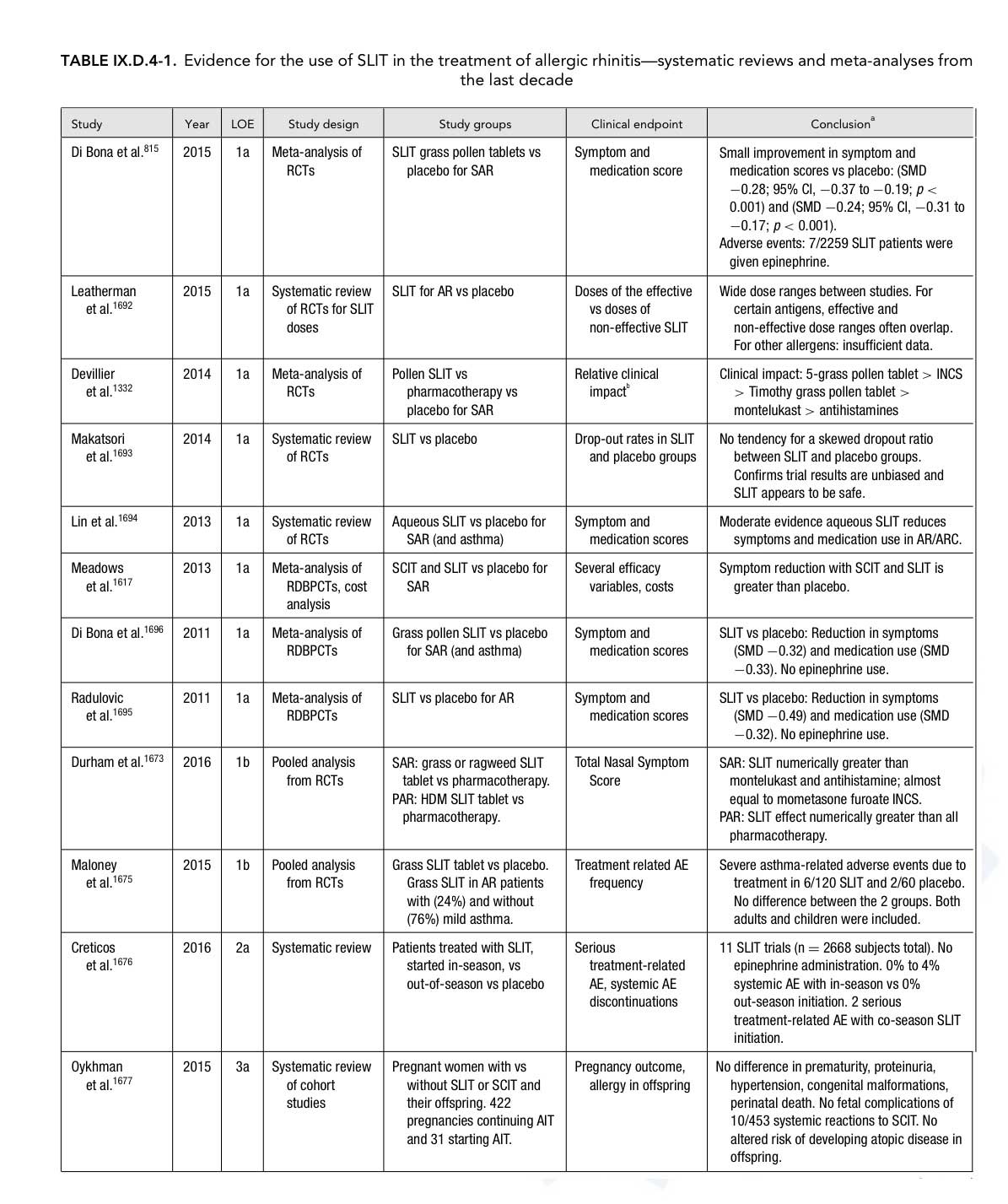
SLIT table

What happens during your food allergy appointment?

1. Detailed history

We review which foods were involved, how quickly symptoms started, what the reaction looked like, and whether emergency care was needed.

2. Medication and medical review

We look at asthma history, eczema, prior testing, and any medication that may affect evaluation.

3. Testing plan

Depending on the case, this may include skin testing, blood work, or discussion of further evaluation.

4. Result interpretation

Testing is only one piece of the diagnosis. Results have to be read in context.

5. Management planning

If a food allergy is confirmed or strongly suspected, we build a practical avoidance and emergency plan.

6. Follow-up

Some Los Angeles Food Allergy Treatment patients need repeat review, especially children, multi-food allergy patients, or anyone considering immunotherapy.

This process aligns with current guidance that food allergy diagnosis requires history plus properly interpreted testing, and sometimes an oral food challenge when the answer is still unclear.

How should I prepare for food allergy testing or evaluation?

  1. Bring a list of suspected foods and ingredients.
  2. Write down what symptoms happened and how long after eating they started.
  3. Note any emergency treatment, urgent care visit, or hospitalization.
  4. Bring prior allergy records if you have them.
  5. Ask before stopping antihistamines, since some tests may be affected.
  6. Do not re-test a food at home to “double check” a reaction.

LA ENT’s current page notes that blood testing has an advantage when antihistamines or active rashes may interfere with skin testing.

What can I expect after food allergy treatment starts?

In most cases, there is no physical recovery period after the visit itself. The adjustment is practical.

Patients can expect a clearer plan for what to avoid, how to read ingredient labels, what to ask at restaurants, and when to use emergency medication. For families, this often means updating school forms, caregiver instructions, and home routines. LA ENT’s current page already highlights avoidance education as a major part of treatment because there is no universal cure for food allergy.

After treatment begins, patients often need:

  • better label-reading habits
  • a plan for accidental exposure
  • a strategy for dining out and travel
  • follow-up if symptoms change or new reactions develop

When will I notice results from food allergy treatment?

Los Angeles food allergy treatment patients often notice the biggest benefit once the diagnosis becomes more precise. That may happen after the first consultation, after testing is interpreted, or after a longer workup if the pattern is complex.

The goal is not to promise that the allergy disappears. The goal is to reduce uncertainty, lower the risk of accidental exposure, and make reactions easier to manage if they occur. For select patients pursuing immunotherapy, changes may happen more gradually and require close follow-up. FoodAllergy.org notes that oral immunotherapy is intended to improve protection against accidental exposure, not replace avoidance or emergency planning.

How long do results last, and how often is maintenance needed?

Food allergy management is ongoing. Some children outgrow certain food allergies, while others persist into adulthood. Follow-up timing depends on the trigger food, age, reaction history, and whether the patient is being monitored for possible re-evaluation.

Maintenance may include:

  • periodic follow-up visits
  • repeat testing when appropriate
  • updated epinephrine prescriptions
  • revised school or travel plans
  • review of whether immunotherapy is appropriate

This is another place where the right diagnosis matters. Testing without interpretation can create unnecessary restriction, while incomplete follow-up can leave patients underprepared for future reactions.

Are there risks or side effects?

The biggest risk is the food allergy itself, especially if reactions involve breathing changes, throat swelling, or anaphylaxis. Evaluation and treatment planning are meant to reduce that risk.

Possible concerns during diagnosis and treatment may include:

  • false-positive test results
  • unnecessary food avoidance if results are misread
  • accidental exposure to the allergen
  • severe reactions that require epinephrine and emergency care
  • side effects or risks related to immunotherapy in selected patients

The FDA notes that PALFORZIA, an approved oral immunotherapy for confirmed peanut allergy in certain age groups, must still be used with peanut avoidance and is not for emergency treatment of allergic reactions.

How much does food allergy treatment cost in Los Angeles?

Food allergy treatment pricing reflects the complexity of the evaluation. Food allergy care may include:

  • specialist consultation
  • skin or blood testing
  • result interpretation
  • emergency action planning
  • follow-up visits
  • discussion of immunotherapy or other advanced management options

For patients considering a longer treatment pathway, cost may also reflect monitoring needs and repeat visits over time. Because food allergy workups vary widely, pricing is best tied to the diagnostic steps and management plan rather than a flat “treatment package.”

Food allergy treatment vs. food intolerance or at-home food sensitivity tests

Food allergy is an immune reaction. Food intolerance is different.

A true food allergy can cause hives, swelling, respiratory symptoms, vomiting, or anaphylaxis. Food intolerance may cause digestive discomfort without involving the same immune mechanism. At-home sensitivity panels can add confusion because a positive result does not prove a clinically meaningful allergy. ACAAI is explicit that these tests should not be used on their own to diagnose food allergy or justify major food elimination.

This comparison section matters for SEO and for patient trust. Many patients arrive convinced they know the trigger. A medically guided evaluation is often what separates a real allergy diagnosis from an unnecessary restriction.

Why choose LA ENT for food allergy treatment?

LA ENT already positions allergy care within a large, multispecialty group and offers allergy testing, allergy treatment, and sublingual immunotherapy across a broad Los Angeles footprint. The current page also emphasizes practical treatment tools such as blood testing, avoidance education, and SLIT.

For this page, the strongest trust points are:

  • a specialist-led diagnostic approach
  • careful interpretation of testing
  • practical guidance for real-world exposure risks
  • access to follow-up across multiple Los Angeles-area locations
  • a management plan that is built around safety, not guesswork

That is the right conversion angle here. Food allergy patients are not looking for hype. They are looking for clarity, caution, and a team that treats false reassurance as a problem.

Frequently Asked Questions about Food Allergy Treatment

What is the best test for a food allergy?

There is no single test that works best in every case. History, skin or blood testing, and sometimes an oral food challenge are used together to confirm or rule out a true food allergy.

Can a blood test confirm how severe my food allergy is?

Not by itself. Blood testing can support diagnosis, but it does not reliably predict how severe a future reaction will be. Results need to be interpreted with your symptoms and history.

Do food allergies ever go away?

Some do, especially in children, but others can persist long term. Follow-up helps determine whether retesting or supervised re-evaluation is appropriate.

What should I do if I think I had an allergic reaction to food?

Avoid the suspected trigger and schedule an evaluation. If symptoms include trouble breathing, throat swelling, or signs of anaphylaxis, use the prescribed epinephrine if available and seek emergency care right away.

Are food sensitivity tests the same as food allergy testing?

No. Food sensitivity panels are not the same as medically supervised allergy testing and can lead to unnecessary food restriction if read as proof of allergy.

Is there a treatment that reduces reactions to accidental peanut exposure?

There is an FDA-approved oral immunotherapy for patients with confirmed peanut allergy in specific age ranges, but it does not replace peanut avoidance, and it is not used for emergency treatment.

When is an oral food challenge used?

An oral food challenge may be recommended when the diagnosis is still uncertain after history and testing. It is done under medical supervision because reactions can occur during the test.

Choose Your Preferred Los Angeles Location

Arcadia

488 E Santa Clara Street STE 202
Arcadia, CA 91006

Book Online Now

855-522-3682

Brentwood

11600 Wilshire Blvd
Ste 324
Los Angeles, CA 90025

Book Online Now

1-855-522-3682

Corona

1820 Fullerton Ave STE 115
Corona, CA 92881

Book Online Now

855-522-3682

Culver City

3280 Motor Ave Ste 220
Los Angeles, CA 90034

Book Online Now

855-522-3682

Downtown LA

1414 S Grand Ave
Suite 123
Los Angeles, CA 90015

Book Online Now

1-855-522-3682

East LA

1700 E. Cesar Chavez Ave
Suite 2500
Los Angeles, CA 90033

Book Online Now

1-855-522-3682

Glendale

1577 E. Chevy Chase Dr.
Suite 210
Glendale, CA 91206

Book Online Now

1-855-522-3682

Hawthorne

14650 Aviation Blvd, #100
Hawthorne, CA 90250

Book Online Now

1-855-522-3682

Hollywood

1300 N. Vermont Ave
Suite 605
Los Angeles, CA 90027

Book Online Now

1-855-522-3682

Huntington Park

3268 E. Gage Ave
Huntington Park, CA 90255

Book Online Now

1-855-522-3682

Inglewood

103 S Locust St
Inglewood, CA 90301

Book Online Now

1-855-522-3682

Long Beach

1045 Atlantic Ave STE 505
Long Beach, CA 90813

Book Online Now

855-522-3682

Lynwood

3737 Martin Luther King Blvd STE 403
Lynwood, CA 90262

Book Online Now

855-522-3682

Montebello

433 N. 4th Street
Suite 212
Montebello, CA 90640

Book Online Now

1-855-522-3682

Northridge

18546 Roscoe Blvd, STE 200
Northridge, CA 91324

Book Online Now

855-522-3682

Palmdale

41250 12th St West
Suite C
Palmdale, CA 93551

Book Online Now

1-855-522-3682

Palm Springs

1180 N Indian Canyon Dr
Suite E311
Palm Springs, CA 92262

Book Online Now

1-855-522-3682

Pasadena

800 Fairmount Ave, #411
Pasadena, CA 91105

Book Online Now

1-855-522-3682

Redlands

124 E Olive Ave
Redlands, CA 92373

Book Online Now

1-855-522-3682

Los Angeles Center for Ear, Nose, Throat and Allergy

Arcadia Brentwood Corona Culver City Downtown LA East LA Glendale Hawthorne Hollywood Huntington Park Inglewood Long Beach Lynwood Montebello Northridge Palmdale Palm Springs Pasadena Redlands