Hearing aids are small electronic devices worn in or behind the ear to amplify sounds. The device typically consists of a microphone, amplifier, and speaker. Digital hearing aids convert the sound waves into numeric codes before amplification and are programmable so some frequencies or sounds coming from certain directions can be more amplified than others allowing for a customizable device.
Take a short quiz to see if Hearing Aids is right for you
Hearing loss is a sudden or gradual decrease in how well you can hear. It is one of the most common conditions affecting senior adults. Approximately one in three people between ages 65-74 have hearing loss, and nearly half of those above 75 have difficulty hearing. Having trouble hearing can make it hard to understand a doctor's advice, respond to warnings, or to hear doorbells and alarms. It can also make it hard to enjoy conversing with friends and family. Since the inner ear houses not only the hearing but also the balance organs, untreated hearing loss is also linked to an increased risk of falls. All of this could lead to frustration, embarrassment, or even a hazard to your overall health.
Hearing loss could occur for a myriad of reasons, ranging from noise exposure or diabetes to simply natural aging. The skilled Audiologists at LACHB are fully-equipped to assess your hearing, with a full scope of audiometric tests utilizing state-of-the-art medical equipment. Should we confirm the presence of hearing loss, a wide range of treatments are available. Thanks to our proximity to the LA Center for Ear, Nose, Throat & Allergy, we can also offer an Otolaryngologist’s (medical doctor) consultation to review diagnoses and treatment plans. Los Angeles hearing aids patient care is our number one priority, and our Doctors are fully invested in your long-term hearing health.
While presbycusis (age-related hearing loss) tends to affect seniors, hearing loss can occur at literally any age. Many young professionals have not been tested since childhood, and even then, only by a school nurse! Seeing a Doctor of Audiology at LACHB can help give you an understanding of your hearing through a standard Audiogram, as well as strategies to preserve your hearing in loud environments. Should there be a considerable hearing loss, then our doctors can work with you to find a discrete, tech-forward solution to restore your hearing while preserving your style. Even if you have perfect hearing, obtaining a hearing test is critical to establish a baseline that you can compare to in future years.
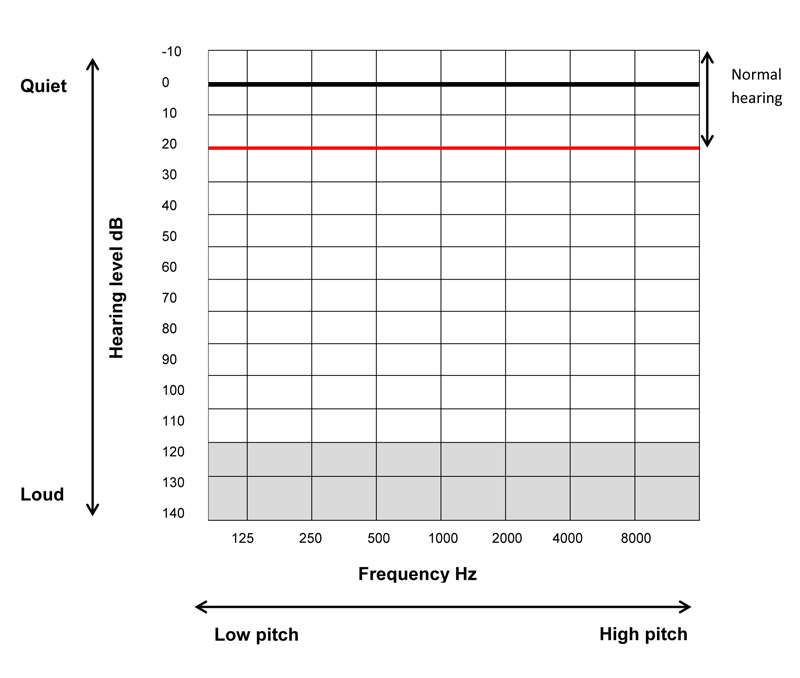
A standard hearing test is a test that provides a measurement of the sensitivity of a person’s hearing across the full range of speech, or 250-8000 Hz. This test is conducted by an Audiologist - or under his or her close supervision - after an otoscopic evaluation. The test is administered through supra-aural headphones or insert earphones, and usually takes about 15 minutes. The goal of the standard hearing test is to measure the quietest sound that can be heard several points across the speech range. The result is an Audiogram, which shows symbols mapped across a range of frequencies. For a more detailed test battery that includes bone-conduction testing as well as speech testing, you may consider a Comprehensive Hearing Test.
What is a Comprehensive Hearing Test?
A comprehensive hearing test is a test that gives an Audiologist or ENT doctor a thorough assessment of your hearing health. This test includes a classic measurement or Standard Hearing Test of your hearing sensitivity across the full range of speech, or 250-8000 Hz via air-conduction. In addition, the comprehensive evaluation includes a bone-conduction hearing test as well as various speech tests. Testing via vibration, or bone-conduction helps the Doctor determine whether there could be a middle-ear anomaly, and speech testing provides information regarding functional hearing acuity. Typically, an ENT or Primary Care Physician would order a comprehensive evaluation in order to obtain as much information about your hearing health as possible.
What is a Tympanogram?
A Tympanogram is a graphic representation of how the eardrum moves in response to the air pressure in the ear canal. When the eardrum is activated by a sound wave, part of the sound is absorbed and sent through the middle ear, while the other part of the sound wave is reflected. The purpose of tympanometry is to assess the state of the middle ear. Abnormalities such as excess cerumen (earwax), otitis media (middle ear infection), or a punctured eardrum could potentially reveal themselves in a tympanogram. A tympanogram is often utilized alongside audiometry (hearing test) to determine the hearing health of the patient.
OAE’s
OAE’s, or Otoacoustic Emissions, are a way to find out how well your
inner ear, or cochlea, works. These are sounds given off by the tiny hairs of your inner ear when responding to a sound. The vibration of these hair cells produces a very quiet sound that echoes back into the middle ear, which are measured as OAE’s. If your hearing loss is greater than 25–30 decibels (dB), or if there is a blockage in either your outer or middle ear space, these very soft sounds will not present during the test. The test is conducted in quiet, with a probe + microphone instrument placed into your ear. You do not need to do anything during this brief time.
Types of Hearing Aids
Hearing aids come in several styles, and the right option depends on the patient’s hearing loss, ear anatomy, and daily listening needs. During a hearing aid consultation, our Doctors of Audiology can review testing results and help determine which device style offers the best fit, sound quality, and ease of use.
Behind-the-Ear (BTE) Hearing Aids
Behind-the-ear hearing aids, or BTE devices, sit behind the ear and send sound through a small tube or earmold. This style can be used for many levels of hearing loss and is often selected for its durability, power, and flexible fit.
Receiver-in-Canal (RIC) Hearing Aids
Receiver-in-canal hearing aids, or RIC devices, sit behind the ear, with the speaker placed inside the ear canal. Many patients choose RIC hearing aids because they are lightweight, discreet, and able to provide clear sound with a comfortable fit.
In-the-Ear (ITE) Hearing Aids
In-the-ear hearing aids, or ITE devices, are custom-made to fit within the outer portion of the ear. Their slightly larger size may make them easier to handle and may allow room for added features, depending on the model.
Completely-in-Canal (CIC) Hearing Aids
Completely-in-canal hearing aids, or CIC devices, fit more deeply inside the ear canal for a less visible appearance. They may be appropriate for certain patients, though their smaller size can limit battery life or available features.
Invisible-in-Canal (IIC) Hearing Aids
Invisible-in-canal hearing aids, or IIC devices, sit deep in the ear canal and are among the most discreet hearing aid styles. Because fit is very specific, they are typically recommended after a full hearing evaluation and ear canal assessment.
Hearing Aid Brands
There are a plethora of hearing aid brands, but choosing the correct hearing aid for your lifestyle, hearing loss, and anatomy is a serious decision. The Doctors of Audiology at the LA Center for Hearing & Balance have the education and the experience to correctly determine which type of device will benefit our hearing aids Los Angeles patients the most. Here are just some of the hearing brands we work with:
GN Resound - Resound is among the world’s largest hearing aid manufacturers. Since the company was founded in 1943, Resound has been known for great sound quality, design excellence, and meaningful solutions that help hearing-impaired people rediscover sounds. Proudly based in Denmark with a US corporate office in Minnesota, Resound developed the first made-for-iPhone hearing aid, and continues to excel in hearing aid connectivity and audibility.
Starkey - Starkey Hearing Technologies is a US-based leader in manufacturing and delivering hearing solutions. Their goal is to bring people together and make lives richer by empowering individuals. The Starkey Hearing Foundation has provided more than 1.5 million hearing aids to people in need worldwide.
Oticon - Oticon was founded on a compassion for people - and a deep understanding of the role that hearing plays in living a richer and fuller life. More than a century later, compassion continues to guide their innovation and drives business through their unique corporate structure in Denmark.
Signia - Formerly known as Siemens, this brand continues more than 130 years of experience in manufacturing hearing aids. Based in Germany, Signia is committed to providing innovative solutions to hearing loss.
Widex - Based in Denmark, Widex designs, develops, and manufactures industry-leading digital hearing aids. Originally founded as a family-owned company, Widex today is part of the WS Audiology family as a result of its 2019 merger with Sivantos (alongside Signia).
Phonak - Phonak is a Swiss company that has been committed to developing, producing, and distributing life-changing hearing solutions for over 70 years. Phonak challenges the limits of technology to overcome difficult listening environments.
Patients now have access to both prescription and over-the-counter hearing aids. OTC hearing aids are intended for adults with perceived mild to moderate hearing loss, while prescription hearing aids are fitted by a licensed hearing professional and can support a broader range of hearing needs.
Prescription hearing aids are selected, programmed, and adjusted based on a complete hearing evaluation. They can be customized to your hearing loss pattern, ear anatomy, speech understanding, comfort, and listening environments. They also include professional support, follow-up fittings, and ongoing adjustments.
OTC hearing aids may be a more accessible option for some adults with mild to moderate hearing concerns. However, they are self-selected and self-fitted, which means they may not be appropriate for more complex hearing loss, tinnitus, dizziness, ear pain, drainage, or sudden hearing changes.
A comprehensive hearing test can help determine which option makes the most sense. For many patients, the first step is understanding the type and degree of hearing loss before choosing a device.
How to Choose the Right Hearing Aid
Choosing a hearing aid involves more than selecting a device style. The most appropriate option should match the patient’s hearing loss, lifestyle, comfort needs, technology preferences, and ability to manage the device each day.
Degree of Hearing Loss
The type and severity of hearing loss help guide which hearing aids may be appropriate. Some devices are better suited for mild hearing loss, while others provide more power for moderate to severe hearing loss.
Lifestyle and Listening Needs
A patient’s daily routine matters. Someone who attends meetings, works in busy environments, dines out often, or uses the phone frequently may need different features than someone who spends most of their time in quieter settings.
Rechargeable vs. Battery-Powered
Rechargeable hearing aids can be convenient for patients who prefer overnight charging and fewer battery changes. Battery-powered hearing aids may be preferred by patients who travel often or want the flexibility of replacing batteries as needed.
Bluetooth and Smart Features
Many modern hearing aids offer Bluetooth connectivity for phone calls, music, television, and app-based adjustments. These features can be helpful, but they are not necessary for every patient. Comfort, clarity, and ease of use remain the priority.
Fit and Comfort
Ear shape, wax production, hand dexterity, and vision can all affect which hearing aid feels most practical. A device should be comfortable enough for consistent use and simple enough to manage with confidence.
Getting Used to Hearing Aids
Adjusting to hearing aids takes time. Even when the devices are fitted correctly, the brain needs a period of practice to process sounds that may have been missing or muted for months or years. Everyday noises may seem louder or sharper at first.
Much like wearing glasses for the first time, most patients adapt gradually with consistent wear. Early use often begins in quieter settings before moving into more complex environments, such as restaurants, group conversations, or outdoor spaces.
Follow-up fittings are an important part of the process. During these visits, the audiologist can adjust volume, clarity, comfort, background noise settings, and physical fit. Small changes can make big differences.
You should bring up any concerns during follow-up visits, including feedback, discomfort, trouble hearing in noise, or difficulty managing the device. Hearing aids work best when they are selected carefully and adjusted over time.
Frequently Asked Questions About Hearing Aids
How long do hearing aids last?
Most hearing aids last about three to five years, depending on the device style, technology, maintenance, moisture exposure, and daily wear. Regular cleanings, proper storage, and routine follow-up visits can help extend the life of the device.
How do I maintain my hearing aids?
Hearing aids should be wiped down about once a month with an alcohol wipe, kept dry (do not keep or charge them in the bathroom), and stored safely when not in use. Patients may also need to replace wax guards, domes, filters, or batteries as directed. Professional cleanings are recommended at least every six months to help keep the devices working properly.
Are hearing aids covered by insurance?
Insurance coverage for hearing aids varies by plan. Some plans may cover part of the hearing test, hearing aid evaluation, device cost, or follow-up care. Patients should contact their insurance carrier to confirm hearing aid benefits and coverage requirements.
Can hearing aids help with tinnitus?
Hearing aids may help some patients with tinnitus, especially when tinnitus occurs with hearing loss. By improving access to surrounding sounds, hearing aids can make tinnitus less noticeable. Some devices also include built-in tinnitus support features.
How often should hearing aids be cleaned?
Hearing aids should be wiped down daily and checked for wax or debris. More detailed cleaning may be needed weekly, depending on the device style and wax production. Professional cleaning may also be recommended during routine follow-up appointments.
Are rechargeable hearing aids better than battery-powered hearing aids?
Rechargeable hearing aids are convenient for patients who prefer overnight charging and fewer battery changes. Battery-powered devices may work well for patients who travel often or prefer replaceable batteries. The better option depends on lifestyle, dexterity, and device preference.
Do hearing aids need follow-up adjustments?
Yes. Follow-up adjustments are a normal part of hearing aid care. As patients adapt to sound, the audiologist may fine-tune volume, clarity, comfort, and background noise settings to improve daily performance.