Chronic Sinusitis

Sinusitis is a condition that refers to an inflammation of the lining within the paranasal sinuses. Sinusitis can be classified by location or duration. If you are interested in learning more about sinusitis treatments Los Angeles patients are encouraged to contact LAENT to schedule a consultation.

Take a short quiz to see if Chronic Sinusitis is right for you

Chronic Sinusitis Quiz

What Is Chronic Sinusitis?

To understand sinusitis, it is important to first learn about your sinuses.

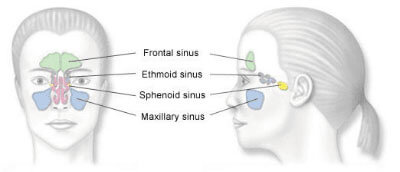
The sinuses are air spaces behind the bones of the upper face, between the eyes and behind the forehead, nose and cheeks. The sinuses are covered with a mucus layer and cells that contain little hairs on their surfaces called cilia. These help trap and push out bacteria and pollutants.

Each sinus has an opening that allows mucous to drain - this drainage is essential to keeping your sinuses working well and you healthy. Anything that obstructs the flow may cause a buildup of mucus in the sinuses and trigger sinusitis symptoms.

Experts agree that healthy sinuses are a key to a good quality of life and that unhealthy sinuses may cause some unwanted complications.

Sinusitis Defined

Sinusitis is defined as an inflammation of the sinus lining commonly caused by bacterial or viral infections and structural issues such as ostial (sinus opening) blockage. Symptoms include nasal congestion, facial discomfort, nasal discharge, headache, and fatigue.

Location classification includes:

  • ethmoid, which causes pain or pressure between or behind the eyes
  • frontal, which causes pain or pressure above and behind the eyes
  • maxillary, which causes pain or pressure in the cheek area
  • sphenoid, which causes pain or pressure behind the eyes

Duration classification includes:

  • acute lasts for four weeks or less
  • subacute lasts four to twelve weeks
  • chronic lasts more than twelve weeks
  • recurrent consists of several acute attacks within a year

Acute cases of sinusitis are usually caused by an inflammation of the sinuses that eventually result in a bacterial infection. Chronic sinusitis is caused when the membranes of both the paranasal sinuses and the nose are thickened because they are constantly inflamed. This constant inflammation is often due to allergies, chronic bacterial infection or nasal polyps.

Sinusitis affects 37 million people in the U.S. each year, making it one of the most common health problems.1 Sinusitis is more prevalent than heart disease or asthma, and it has a greater impact on quality of life than chronic back pain or congestive heart failure.2 Symptoms may significantly affect people physically, functionally, and emotionally.

The Benefits of Treatment

Successfully treating sinusitis is about more than just clearing your nose; it’s about getting your vitality back. Patients often report that the nagging facial pressure finally lifts, their sleep quality improves drastically, and they can breathe effortlessly again. Many are surprised to find their sense of smell and taste returning after months of being dulled by inflammation. Ultimately, the goal is to stop relying on pain relievers and start feeling like yourself again.

Are You a Candidate?

If you’ve been battling sinus infections that keep coming back despite multiple rounds of antibiotics or nasal sprays, you are likely a candidate. We generally look for patients with symptoms lasting longer than three months, including nasal congestion, facial pain, ear pressure, a stiff neck, "allergies," or difficulty breathing through the nose. You may have already tried every over-the-counter medicine and warm compress available without lasting relief. A consultation with an ear, nose, and throat specialist can determine if there is a structural issue keeping you sick.

chronic sinusitis medical image

Types of Sinusitis

There are two main categories of sinusitis: acute and chronic.

Sinusitis is usually preceded by a cold, allergy attack or irritation from environmental pollutants. Often, the resulting symptoms, such as nasal pressure, nasal congestion, a "runny nose," and fever, run their course in a few days. However, if symptoms persist, a bacterial infection or acute sinusitis may develop.

Most cases of sinusitis are acute (or sudden onset); however, if the condition occurs frequently (more than 4 times each year) you may have recurrent acute sinusitis. If your sinusitis symptoms last 12 weeks or more, you may have chronic sinusitis.

Facts About Sinusitis

  • Sinusitis affects approximately 14% of the adult U.S. population.3
  • Sinusitis affects 17% of women and 10% of men each year.3
  • Chronic sinusitis (not including acute sinusitis) results annually in an estimated 7 million physician office visits.1-4
  • Direct healthcare expenditures due to sinusitis cost are well over $8 billion each year.*5
  • Sinusitis is also responsible for a 38% loss of workplace productivity.6
  • Total restricted activity days due to sinusitis are over 58 million per year.5

* Inflation Adjusted 

Procedures For Chronic Sinusitis

Modern sinus surgery has moved away from invasive techniques and now focuses on precision and preserving healthy tissue. We use minimally invasive methods like Functional Endoscopic Sinus Surgery (FESS) or Balloon Sinuplasty to gently widen the natural drainage pathways. These procedures are performed entirely through the nostrils, often using image-guided technology to ensure safety and accuracy. The objective is simply to open the nasal passages so your sinuses can drain naturally again without the need for external incisions.

Chronic Sinusitis Treatments

Functional Endoscopic Sinus Surgery (FESS)

Surgery of the nose and sinuses has experienced remarkable progress in the past 50 years, benefiting from improved imaging, better understanding of anatomy, and image-guided surgical techniques. FESS is the primary approach today for treating chronic sinusitis that doesn’t respond to other medical treatment.

There are, however, many other situations that the FESS procedure may address, including nasal polyps, excision of some tumors, closing leaks of cerebrospinal fluid, decompression procedures of the eye socket and optic nerve, as well as for removing foreign bodies from the nose and sinuses. Though FESS is a surgical procedure, it is minimally invasive, as cutting occurs only for procedures requiring tissue removal. Fiber optics aid the surgeon’s navigation and CT imagery may assist the process. Improvement of symptoms for patients with chronic sinusitis has around a 90% success rate, and FESS has a much lower complication rate than conventional sinus surgery.

Image-Guided Sinus Surgery

Given the senses and organs that surround the nasal and sinus regions, surgical precision is essential to treat sinus issues without affecting other systems. Image-guided surgery provides a powerful assist to the surgeon by providing instant feedback on the location of an endoscope or probe during a procedure.

CT or MRI imagery and a guidance computer combine with sensors to give precise location of the device, providing margins of safety when the surgeon is near critical structures around the sinuses. Two systems, each providing different information, are in common use today. Optical systems use infrared light to report the probe’s location in combination with reflectors or emitters attached to the patient with a headband or adhesive. Electromagnetic systems use magnetic fields to locate apparatus, again using sensors placed on the patient’s head.

Balloon Sinuplasty

An alternative to traditional endoscopic procedures, balloon sinuplasty, or BSP, provides a less invasive treatment with fast recovery and little patient impact. A balloon catheter is placed at the entrance to an inflamed sinus. As the balloon inflates, it expands the sinus opening.

To treat sinusitis, for example, the sinus would then be flushed with saline solution to clear the sinus of mucus and pus, permitting the sinus to heal. Typically, the sinus opening remains open after the balloon catheter is deflated and removed from the patient, without upsetting the integrity of the sinus walls. Recovery time averages about two days until a patient resumes regular activities. A study of patients receiving a balloon sinuplasty to treat chronic sinusitis reported significant symptom reduction two years post-procedure.

Adenoidectomy

Along with the tonsils, the adenoids are part of the immune system, in this case part of the lymphatic path. In children, the adenoids and tonsils serve as part of the front line of the immune system, and both can be frequently inflamed. When inflamed, the adenoids may make breathing difficult, while blocking the eustachian tubes and preventing drainage from the middle ear.

This may lead to frequent ear infections, problems swallowing, sore throats, obstructive sleep apnea, and difficulty breathing through the nose. When a child has several ear and throat infections annually and does not respond to antibiotic treatments, adenoidectomy may be the best solution to prevent further issues.

Recovery

Recovery is usually much faster than patients anticipate, especially with minimally invasive options. For procedures like balloon sinuplasty, many people are back to their regular routine within just a couple of days. If you undergo FESS, you might experience some nasal congestion or runny nose, ear pressure, and fatigue for about a week, similar to having a bad head cold. We provide a clear recovery plan to ensure you heal comfortably, and most discomfort is easily managed.

Drinking plenty of water, taking care of your body, and staying healthy are great ways to keep your recovery smooth and results fresh.

Results

The primary result of the previous treatments and surgeries is breaking the exhausting cycle of chronic sinus infections. While you might still catch the occasional common cold, or even a rare sinus infection, it should be a “normal” case of feeling unwell and shouldn't spiral into a months-long ordeal anymore. Studies show that opening these pathways leads to long-term relief from sinus headaches and fatigue. You can expect a significant improvement in your quality of life, with fewer sick days and less reliance on medication.

Cost

Because chronic sinusitis is a functional health issue, sinusitis treatment—including surgery—is typically covered by medical insurance. This sets it apart from cosmetic procedures, although we can certainly discuss combining treatments if you have aesthetic goals too. Our office will work with you to check your insurance benefits so you have a clear understanding of the costs before moving forward.

Frequently Asked Questions

Is chronic sinusitis contagious?

Usually, no. While the initial infection might have been caught from someone else, chronic sinusitis is typically caused by internal inflammation or blockage, so you aren't likely to pass it on.

Can’t I just keep taking antibiotics?

Relying on antibiotics long-term can lead to resistance, meaning the medicine stops working when you really need it. Furthermore, pills treat bacteria, but they cannot fix physical problems like polyps or narrow drainage pathways.

Does a deviated septum always cause sinusitis?

Not always, but it is a very common factor. If the wall between your nasal passages is crooked, it blocks airflow and drainage, creating a perfect hiding spot for infection.

Will sinus surgery change my appearance?

No, these procedures are done endoscopically through the nostrils. There are no black eyes or external incisions, so you will look exactly like yourself—just more rested.

How do I know if it's a migraine or a sinus headache?

It can be tricky, but sinusitis symptoms usually involve congestion, fever, or discharge alongside the pain. If you have facial pain but your nose is clear, it may be a migraine; a specialist can help you tell the difference.

Why choose a specialist for Los Angeles sinusitis treatment?

Your face and sinuses are complex structures that require expert care. A dedicated healthcare provider in ear, nose, and throat medicine ensures you get a long-term breathing solution, not just a temporary patch for your symptoms.

1. Benninger, M. et al. Adult chronic rhinosinusitis: Definitions, diagnosis, epidemiology, and pathophysiology. Otolaryngol Head Neck Surg 2003; 129S: S1-S32

2. Soler, et al. Health state utility values in patients undergoing endoscopic sinus surgery. Laryngoscope 2011; 121: 2672-2678.

3. Pleis, JR. et al. Summary health statistics for U.S. adults: National Health Interview Survey, 2006. National Center for Health Statistics 2007. Vital Health Stat 10(235).

4. Bhattacharyya N. Clinical and symptom criteria for the accurate diagnosis of chronic rhinosinusitis. Laryngoscope 2006; 116(Suppl 110):1-22

5. Ray, N. et al. Healthcare expenditures for sinusitis in 1996: Contributions of asthma, rhinitis, and other airway disorders. J Allergy Clin Immunol 1999; 103: 408-414. (Inflation Adjusted as per CPI to 2010 dollars.)

6. Stankiewicz J. et al. Impact of chronic rhinosinusitis on work productivity through one-year follow-up after balloon dilation of the ethmoid infundibulum. Int Forum Allergy Rhinol 2011; 1: 38-45

Choose Your Preferred Los Angeles Location

East LA

1700 E. Cesar Chavez Ave
Suite 2500
Los Angeles, CA 90033

Book Online Now

1-855-522-3682

Glendale

1577 E. Chevy Chase Dr.
Suite 330
Glendale, CA 91206

Book Online Now

1-855-522-3682

Hollywood

1300 N. Vermont Ave
Suite 605
Los Angeles, CA 90027

Book Online Now

1-855-522-3682

Montebello

433 N. 4th Street
Suite 212
Montebello, CA 90640

Book Online Now

1-855-522-3682

Pasadena

800 Fairmount Ave, #411
Pasadena, CA 91105

Book Online Now

1-855-522-3682

Downtown LA

1414 S Grand Ave
Suite 123
Los Angeles, CA 90015

Book Online Now

1-855-522-3682

Huntington Park

3268 E. Gage Ave
Huntington Park, CA 90255

Book Online Now

1-855-522-3682

South Bay

14650 Aviation Blvd, #100
South Bay, CA 90250

Book Online Now

1-855-522-3682

Palmdale

41250 12th St West
Suite C
Palmdale, CA 93551

Book Online Now

1-855-522-3682

Palm Springs

1180 N Indian Canyon Dr
Suite E311
Palm Springs, CA 92262

Book Online Now

1-855-522-3682

Brentwood

11600 Wilshire Blvd
Ste 324
Los Angeles, CA 90025

Book Online Now

1-855-522-3682

Inglewood

103 S Locust St
Inglewood, CA 90301

Book Online Now

1-855-522-3682

Lynwood

3737 Martin Luther King Blvd STE 403
Lynwood, CA 90262

Book Online Now

855-522-3682

Corona

1820 Fullerton Ave STE 115
Corona, CA 92881

Book Online Now

855-522-3682

Arcadia

488 E Santa Clara Street STE 202
Arcadia, CA 91006

Book Online Now

855-522-3682

Long Beach

1045 Atlantic Ave STE 505
Long Beach, CA 90813

Book Online Now

855-522-3682

Northridge

18546 Roscoe Blvd, STE 200
Northridge, CA 91324

Book Online Now

855-522-3682

Los Angeles Center for Ear, Nose, Throat and Allergy

East LA Glendale Hollywood Montebello Pasadena Downtown LA Huntington Park South Bay Palmdale Palm Springs Brentwood Inglewood Lynwood Corona Arcadia Long Beach Northridge